Cardinal Tetra in an aquarium. Photo: Bailey Duncan. View source · CC BY 4.0 · Provider large rendition (maximum 1024px); no subsequent cropping or colour changes..
Use the guide at the retailer to compare breathing, posture, body condition, skin, fins, eyes, and behavior with what is normal for the species. Look at the whole sales system, ask about feeding and recent arrivals, and quarantine every new fish before it shares water or equipment with an established aquarium.
This is an observation guide, not a diagnosis. A fish that looks healthy can still carry pathogens, while transport, lighting, age, sex, and social position can change normal appearance and behavior.
Photographs are reference examples, not evidence that an individual fish is healthy. Profiles without a verified aquarium photograph remain text-only.
Content transparency
AI-generated draft, human-reviewed publication
This guide was drafted with generative AI used to organize research and prepare an initial version. The AI output was not treated as an authority or source. Simon from the Simply Submerged Aquatics team reviewed the published guide for accuracy and completeness within the scope recorded below.
Human reviewerSimonTankWise product lead and freshwater aquarist
Last reviewed
What the human review covered
Fish-selection text and identity notes reviewed by Simon.
Watch before anyone taps the glass, feeds the fish, or reaches for a net. Compare breathing, posture, body condition, skin, fins, eyes, and behavior across the group rather than choosing only by color or activity.
Pause if a tankmate is dead, unable to balance, extremely thin, ulcerated, heavily spotted, covered in growth, or breathing with pronounced effort. Ask when the fish arrived, whether it has eaten, and whether nearby tanks share filtration.
A feeding response is useful evidence, but it does not prove that a fish is disease-free. Quarantine every new arrival separately and avoid sharing wet equipment with the established aquarium.
Observe the group from a distance before selecting a candidate.
Compare the candidate with several fish of the same species when possible.
Confirm the store label and scientific identity.
Ask about arrival date, feeding, treatment history, and shared filtration.
Check the species against your aquarium in TankWise before purchase.
Cardinal Tetra
Paracheirodon axelrodi
Reference photo: Bailey Duncan. View original · CC BY 4.0. Provider large rendition (maximum 1024px); no subsequent cropping or colour changes.
What to notice
Compare this fish with several of the same species when possible. Ask the retailer about feeding, arrival time and the behavior you observe. Brief hiding or a social display is different from persistent exclusion, injury or inability to feed; interpret it alongside breathing, body condition and the whole sales tank.
Peppered Corydoras
Corydoras paleatus
Reference photo: plingus22. View original · CC BY 4.0. Provider large rendition (maximum 1024px); no subsequent cropping or colour changes.
What to notice
Compare this fish with several of the same species when possible. Ask the retailer about feeding, arrival time and the behavior you observe. Brief hiding or a social display is different from persistent exclusion, injury or inability to feed; interpret it alongside breathing, body condition and the whole sales tank.
Giant Danio
Devario aequipinnatus
Compare this fish with several of the same species when possible. Ask the retailer about feeding, arrival time and the behavior you observe. Brief hiding or a social display is different from persistent exclusion, injury or inability to feed; interpret it alongside breathing, body condition and the whole sales tank.
Paradise Fish
Macropodus opercularis
Compare this fish with several of the same species when possible. Ask the retailer about feeding, arrival time and the behavior you observe. Brief hiding or a social display is different from persistent exclusion, injury or inability to feed; interpret it alongside breathing, body condition and the whole sales tank.
Gardneri Killifish
Fundulopanchax gardneri
Compare this fish with several of the same species when possible. Ask the retailer about feeding, arrival time and the behavior you observe. Brief hiding or a social display is different from persistent exclusion, injury or inability to feed; interpret it alongside breathing, body condition and the whole sales tank.
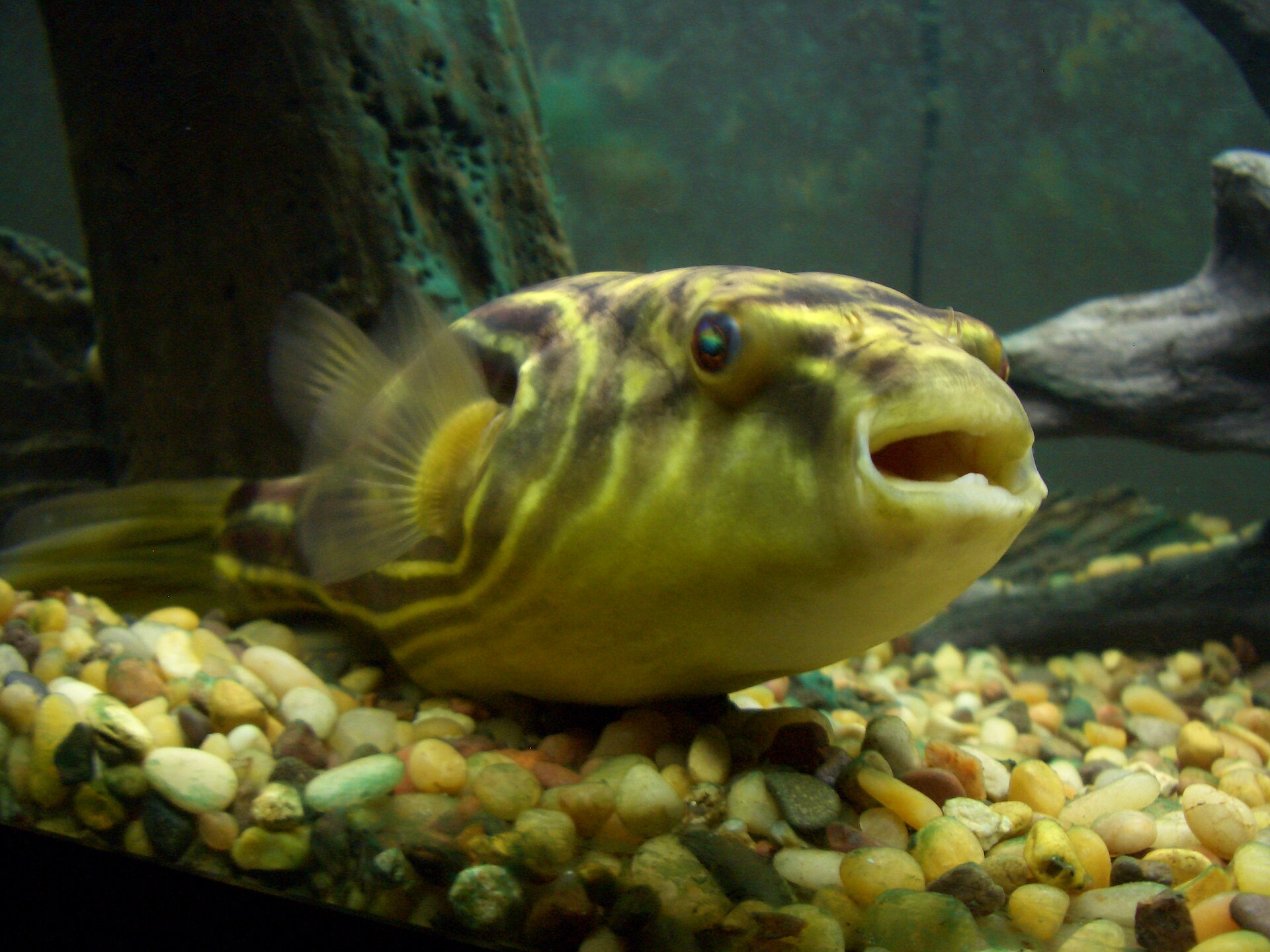
Fahaka Puffer
Tetraodon lineatus
Reference photo: Earedien. View original · Public domain. Existing local candidate copied without modification; previous resize provenance must be checked.
What to notice
Compare this fish with several of the same species when possible. Ask the retailer about feeding, arrival time and the behavior you observe. Brief hiding or a social display is different from persistent exclusion, injury or inability to feed; interpret it alongside breathing, body condition and the whole sales tank.
Blue Acara
Andinoacara pulcher
Blue acara is treated here as Andinoacara pulcher. Andinoacara latifrons is a distinct species, often called platinum acara; confirm which species the retailer is selling.
Compare this fish with several of the same species when possible. Ask the retailer about feeding, arrival time and the behavior you observe. Brief hiding or a social display is different from persistent exclusion, injury or inability to feed; interpret it alongside breathing, body condition and the whole sales tank.
Sunshine Peacock Cichlid
Aulonocara baenschi
Compare this fish with several of the same species when possible. Ask the retailer about feeding, arrival time and the behavior you observe. Brief hiding or a social display is different from persistent exclusion, injury or inability to feed; interpret it alongside breathing, body condition and the whole sales tank.
Lemon Tetra
Hyphessobrycon pulchripinnis
Compare this fish with several of the same species when possible. Ask the retailer about feeding, arrival time and the behavior you observe. Brief hiding or a social display is different from persistent exclusion, injury or inability to feed; interpret it alongside breathing, body condition and the whole sales tank.
Peacock Gudgeon
Tateurndina ocellicauda
Reference photo: Kaden Slone. View original · CC BY 4.0. Provider large rendition (maximum 1024px); no subsequent cropping or colour changes.
What to notice
Compare this fish with several of the same species when possible. Ask the retailer about feeding, arrival time and the behavior you observe. Brief hiding or a social display is different from persistent exclusion, injury or inability to feed; interpret it alongside breathing, body condition and the whole sales tank.
Sources and further reading
These references provide scientific or technical background and disclose how TankWise works. External references do not imply that every current TankWise catalog value was sourced from, or reviewed by, those organizations. See the checker methodology and known limits for that distinction.
Supports checking adult needs, body condition, breathing, behavior, and the wider sales system, while recognizing that a normal-looking fish may still carry disease.
Separately accepted platinum acara; not interchangeable with A. pulcher.
Frequently asked questions
Can a fish that looks healthy still carry disease?
Yes. Visual screening can identify reasons to pause, but it cannot prove that a fish is free of pathogens or parasites. Quarantine new arrivals and avoid sharing wet equipment with an established aquarium.
Should I buy from a tank containing a dead or visibly distressed fish?
Pause and ask what happened, whether the tanks share filtration, and what action the retailer is taking. Choosing another fish from the same water does not remove shared exposure.
Is unusual color, hiding, or resting always a sign of illness?
No. Lighting, transport, age, sex, social position, and species-normal behavior can change appearance and activity. Review breathing, posture, body condition, skin, fins, eyes, and the condition of the whole tank together.
Where does TankWise fit?
This guide helps screen the individual fish. TankWise then compares the species' needs with your aquarium, water, and current livestock. It does not diagnose illness or guarantee compatibility.
TankWiseFreshwater aquarium companion
Check the fish. Then check the fit.
TankWise screens what your fish needs first, then compares against your aquarium, water, and current livestock before you buy.

 Cardinal TetraParacheirodon axelrodi
 Peppered CorydorasCorydoras paleatusGiant DanioDevario aequipinnatusParadise FishMacropodus opercularisGardneri KillifishFundulopanchax gardneri
 Fahaka PufferTetraodon lineatusBlue AcaraAndinoacara pulcherSunshine Peacock CichlidAulonocara baenschiLemon TetraHyphessobrycon pulchripinnis
 Peacock GudgeonTateurndina ocellicauda

