

Buying a healthy fish starts before the bag is tied. Look at the candidate, its tankmates, and the connected sales system. A strong candidate should breathe steadily, control its posture and movement, carry reasonable body condition, and show skin, eyes, fins, scales, or barbels appropriate to the species.
This is a visual screening guide, not a diagnosis. Shipping, lighting, social position, age, sex, and time of day can change how a fish looks or behaves. A fish that appears healthy can also carry pathogens. Pause when the signs do not make sense together, ask the retailer for context, and quarantine new arrivals before they share water or equipment with the established aquarium.
Content transparency
AI-generated draft, human-reviewed publication
This guide was drafted with generative AI used to organize research and prepare an initial version. The AI output was not treated as an authority or source. Simon from the Simply Submerged Aquatics team reviewed the published guide for accuracy and completeness within the scope recorded below.
What the human review covered
- Species identities, scientific names, and exact reference photographs
- Healthy signs, purchase warning signs, and diagnostic limitations
- Species-normal behavior and temperament distinctions
- Source citations, image credits, and TankWise app statements
Key takeaways
- Watch the whole sales tank before choosing an individual fish.
- Compare breathing, posture, body condition, skin, eyes, fins, and response rather than relying on one sign.
- Allow for species-normal behavior such as Corydoras air-gulping, knifefish hiding, or cichlid territorial display.
- Confirm the scientific identity when similar fish share a trade name or appearance.
- A healthy-looking fish still needs a suitable aquarium; compare its adult needs with your tank before buying.
Store-side field guide
10 fish at a glance
Match the store label to the fish, then jump straight to its healthy and warning signs.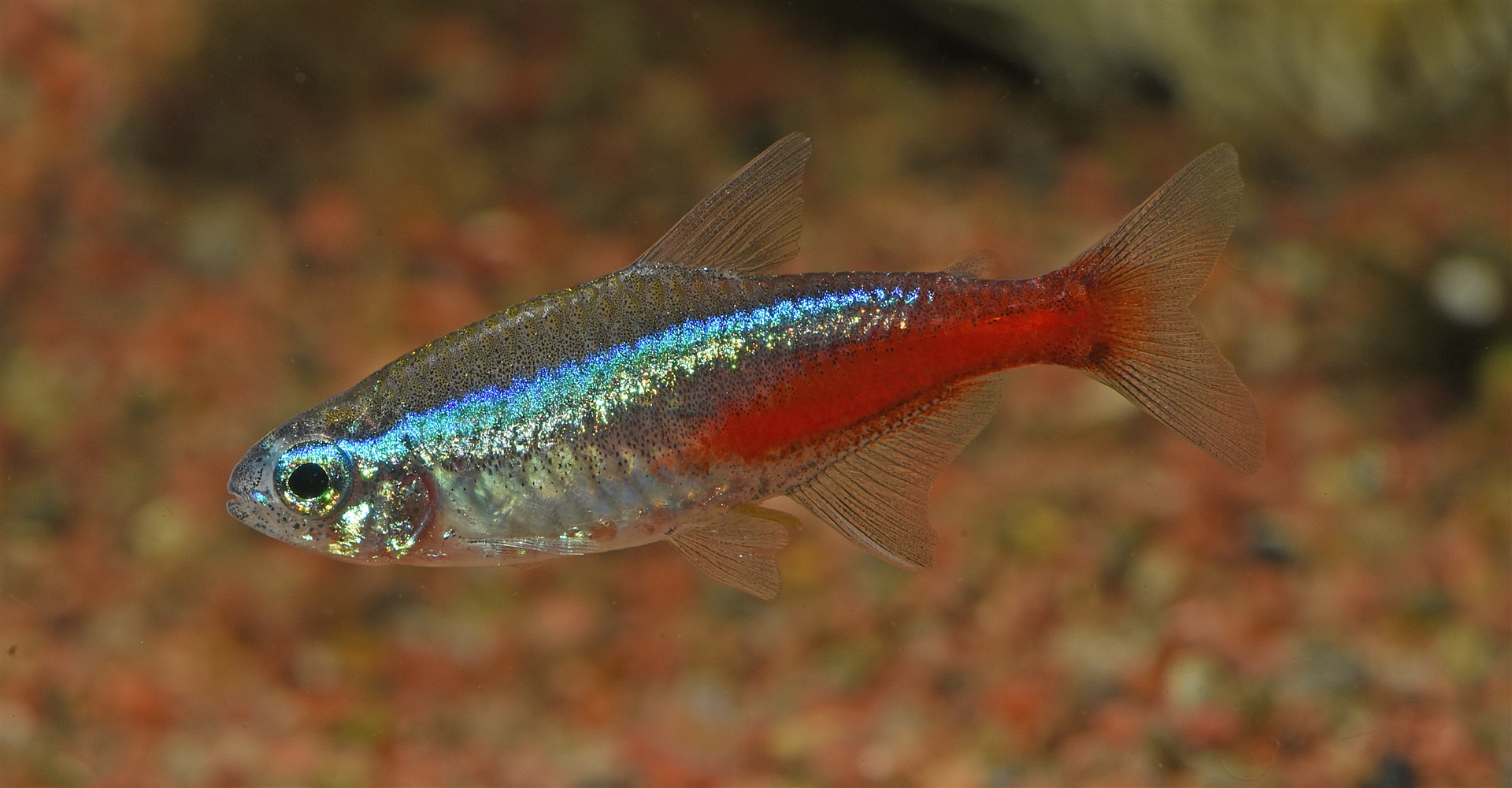 Neon TetraParacheirodon innesi
 Panda CorydorasHoplisoma panda (formerly Corydoras panda)
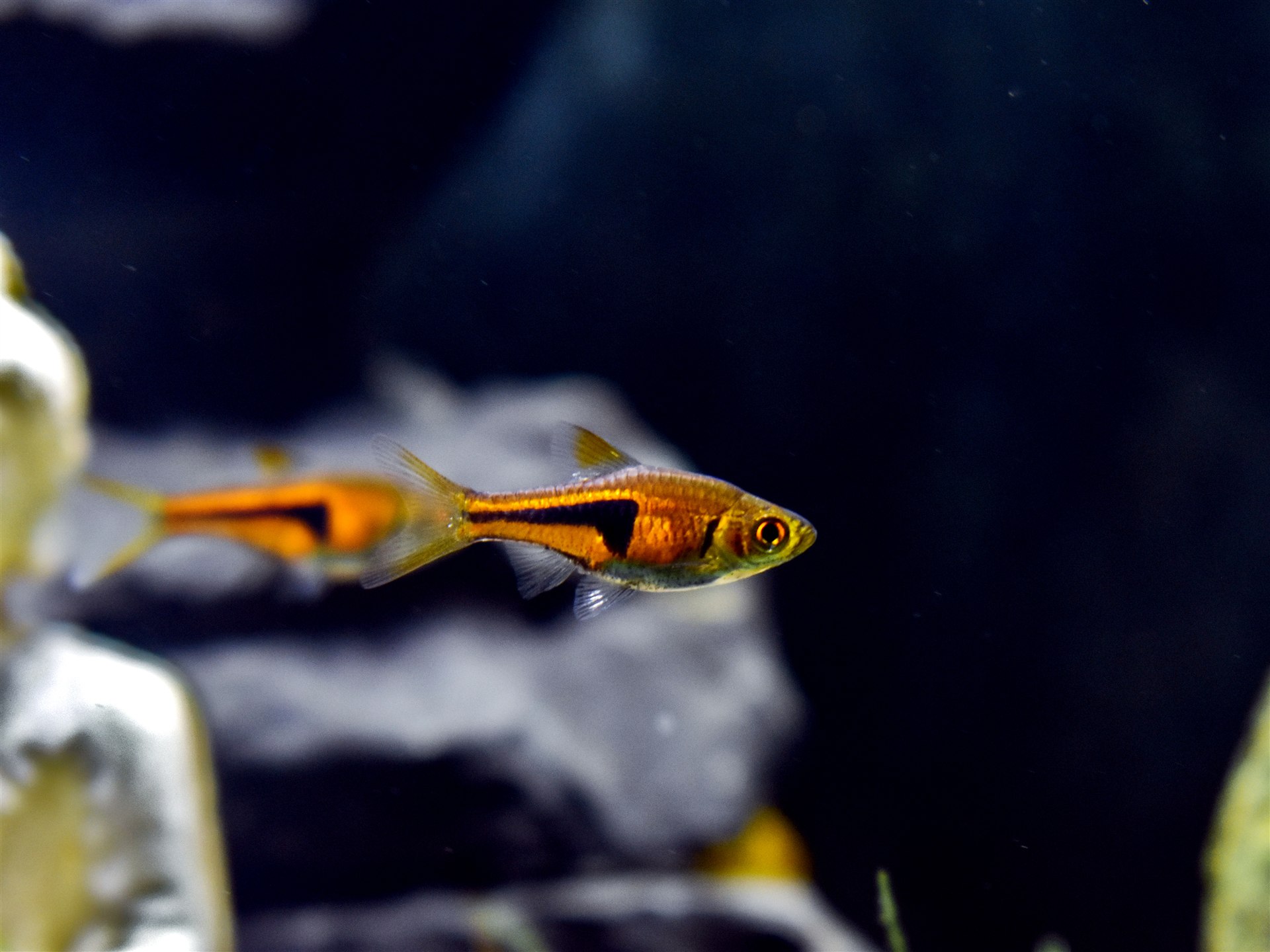 Lambchop RasboraTrigonostigma espei
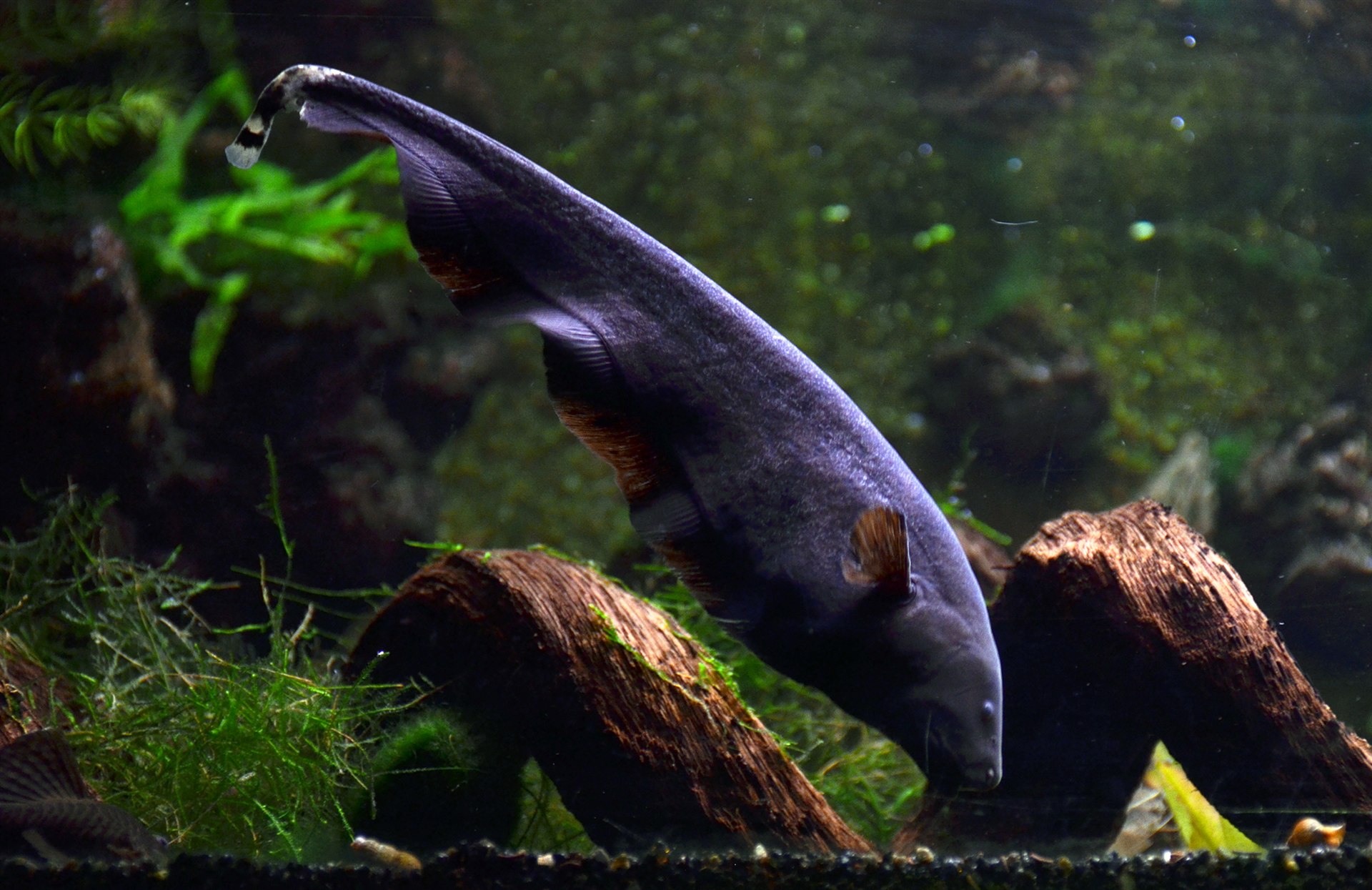 Black Ghost KnifefishApteronotus albifronsBlack Ruby BarbPethia nigrofasciata
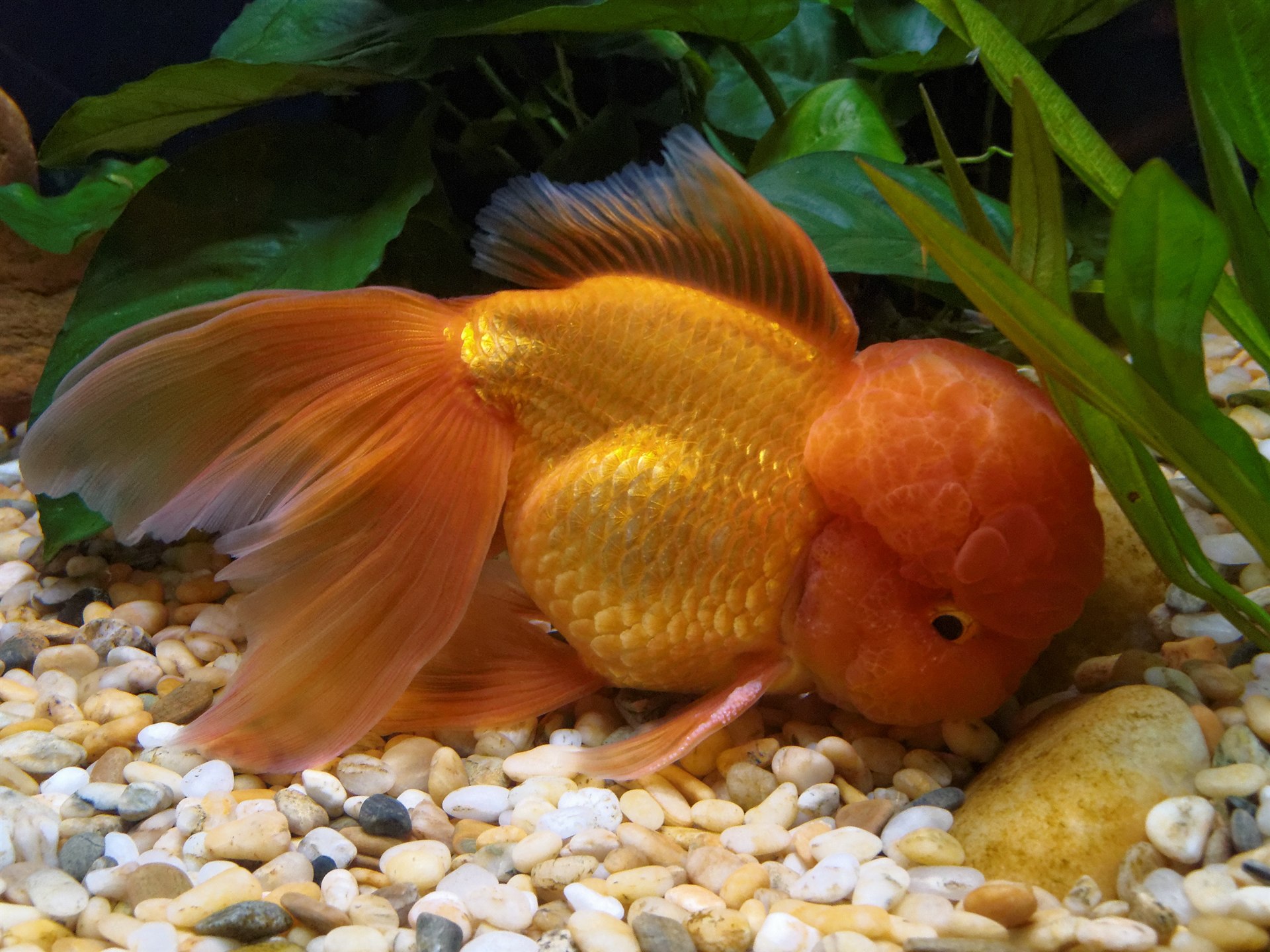 Oranda GoldfishCarassius auratus (domestic Oranda variety)
 Blood Parrot CichlidHybrid cichlid trade form
 Red Zebra CichlidMaylandia estherae
 Featherfin SqueakerSynodontis eupterus
 Phoenix RasboraBoraras merah
Check the sales tank before the fish
Watch before anyone taps the glass, feeds the fish, or reaches for a net. Compare breathing, posture, body condition, skin, fins, eyes, and behavior across the group rather than choosing only by color or activity.
Pause if a tankmate is dead, unable to balance, extremely thin, ulcerated, heavily spotted, covered in growth, or breathing with pronounced effort. Ask when the fish arrived, whether it has eaten, and whether nearby tanks share filtration.
When practical, ask to see a feeding response. Feeding is useful evidence, but it does not prove that a fish is disease-free. Do not assume the brightest or most active fish is automatically the healthiest; normal color and activity depend on the species and situation.
- Observe the group from a distance before selecting a candidate.
- Compare the candidate with several fish of the same species.
- Inspect both sides of the body, the underside, mouth, eyes, gill covers, skin, and fins.
- Ask about arrival date, recent feeding, shared filtration, and any treatment or losses.
- Confirm the scientific name and expected adult needs.
- Prepare quarantine before taking the fish home.
Neon Tetra
Paracheirodon innesi
What to notice
Neon Tetras are small schooling fish with an iridescent blue stripe and red coloration on the rear half of the body. Shop lighting and recent transport can temporarily reduce color, so judge color alongside body shape, breathing, swimming control, and participation in the group.
A brief scatter when someone approaches can be normal. Persistent separation becomes more concerning when it is combined with weight loss, breathing effort, poor posture, fading that does not improve, or failure to respond to the school.
Panda Corydoras
Hoplisoma panda (formerly Corydoras panda)
.jpg)
What to notice
The trade name remains Panda Corydoras, while FishBase lists Hoplisoma panda as the accepted name and retains Corydoras panda as the familiar former combination. The dark eye mask, dorsal marking, and tail-base marking should be clear, but pattern strength can vary with stress and lighting.
Corydoras alternate between resting and quick bursts of activity. A fast trip to the surface can be normal air-gulping behavior. Repeated distressed surfacing, heavy gill movement, poor balance, or similar behavior across the tank is a reason to stop and ask about water quality and recent handling.
Lambchop Rasbora
Trigonostigma espei

What to notice
The Lambchop Rasbora is a small copper-to-orange schooling fish with a dark, narrow marking that widens toward the rear. Retail labels can be confused with Harlequin and Glowlight or Hengel's Rasboras, so identity belongs in the purchase check.
The group may tighten when startled and spread out once calm. Short chases can occur during display, but one fish should not be relentlessly driven away from food or shelter. Judge a quieter fish by breathing, condition, posture, and ability to rejoin the group rather than activity alone.
Black Ghost Knifefish
Apteronotus albifrons

What to notice
Black Ghost Knifefish have a long dark body, a pale band near the tail, and an extended anal fin that produces smooth forward and backward movement. They are often reserved under bright shop lighting. Look for straight posture, steady breathing, and controlled movement when the fish emerges.
Hiding in a tube, cave, or dark corner during the day can be normal. Ask to observe the fish under calmer or dimmer conditions and ask whether staff have seen it feed. Frantic exposure, body damage from inadequate shelter, or inability to swim normally is different from choosing cover.
Black Ruby Barb
Pethia nigrofasciata
Black Ruby Barb color changes with sex, maturity, condition, social display, and surroundings. Mature males can become deep ruby and dark during display, while females and younger fish are usually less intense. Lack of adult-male color is not by itself illness.
Barbs can display and chase. A short exchange is different from sustained harassment that leaves one fish hiding, injured, or excluded from food. Compare several individuals and do not treat a female or juvenile's quieter color as proof of poor health.
Oranda Goldfish
Carassius auratus (domestic Oranda variety)

What to notice
An Oranda combines a deep fancy-goldfish body with a fleshy head growth called a wen. The wen is normal for the variety; injury, inflamed tissue, trapped debris, or tissue compromising the eyes or gill covers should not be dismissed as just an Oranda feature.
The rounded body and wen are intentional, and an Oranda will not swim like a Comet. That does not make chronic loss of balance normal. Watch long enough to see the fish turn, stop, rise, descend, and feed. A specialized body shape should still function.
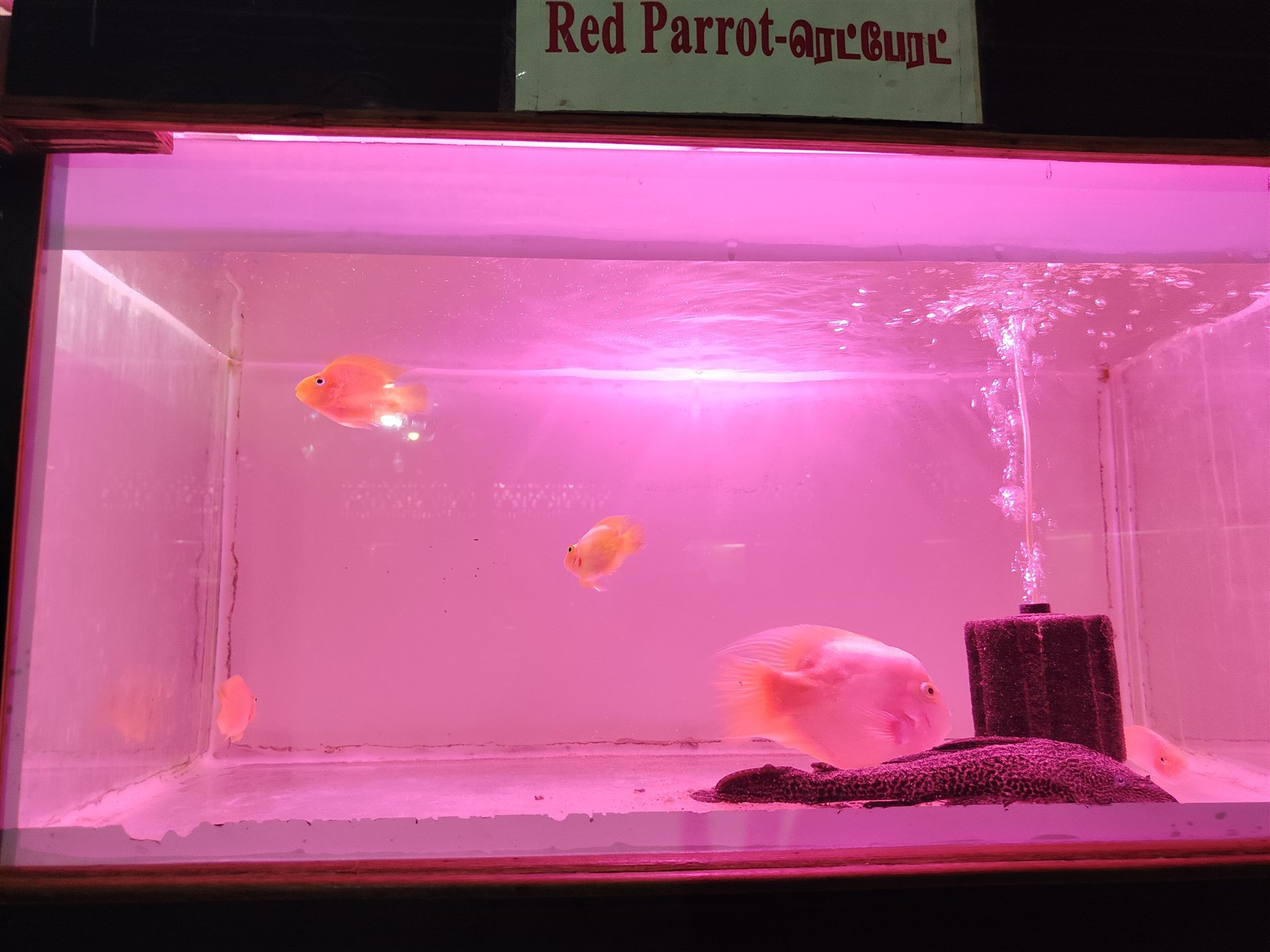
Blood Parrot Cichlid
Hybrid cichlid trade form

What to notice
Blood Parrot Cichlids are domestic hybrids with a compact body and a characteristically restricted mouth. Individual form and color vary. Focus on function: can this fish breathe, swim, turn, feed, and compete without obvious distress? No single scientific binomial should be presented as though this trade form were a natural species.
Individuals may be shy, territorial, or pushy. Hiding after a disturbance is not automatically illness; persistent inability to feed, relentless attack, damaged fins, heavy breathing, or failure to recover is more concerning.
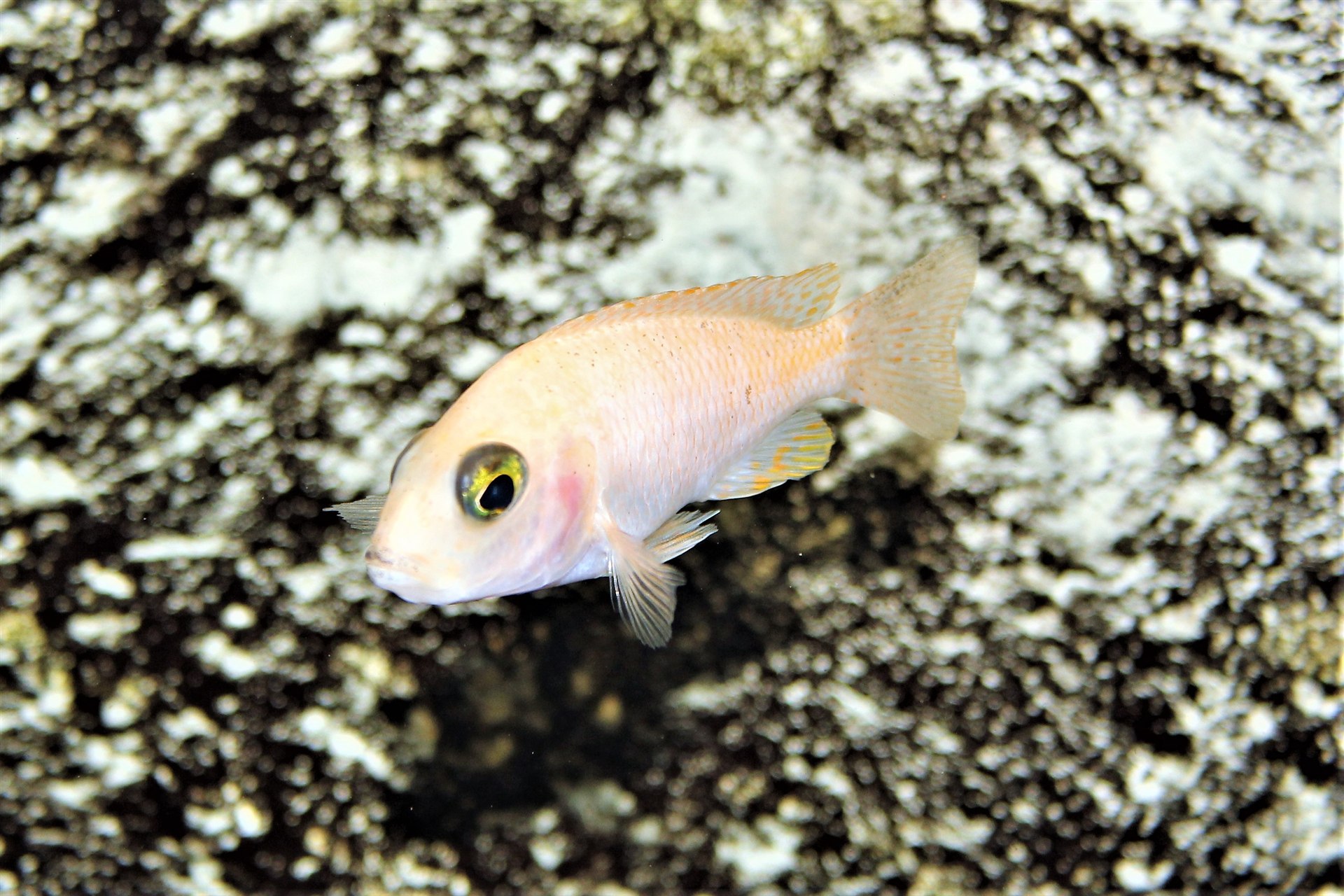
Red Zebra Cichlid
Maylandia estherae

What to notice
Red Zebra Cichlids are Lake Malawi mbuna. Despite the common name, trade fish can be orange, red-orange, or blue depending on sex and color form. Color alone is a poor identity or health test; body condition, jaw alignment, fins, breathing, swimming, and the social setting provide better evidence.
Territorial display and chasing are normal parts of mbuna behavior, but the sales tank should still allow fish to escape, rest, and feed. Continuous attack, injury, collapse in a corner, or inability to reach food is not a harmless display.
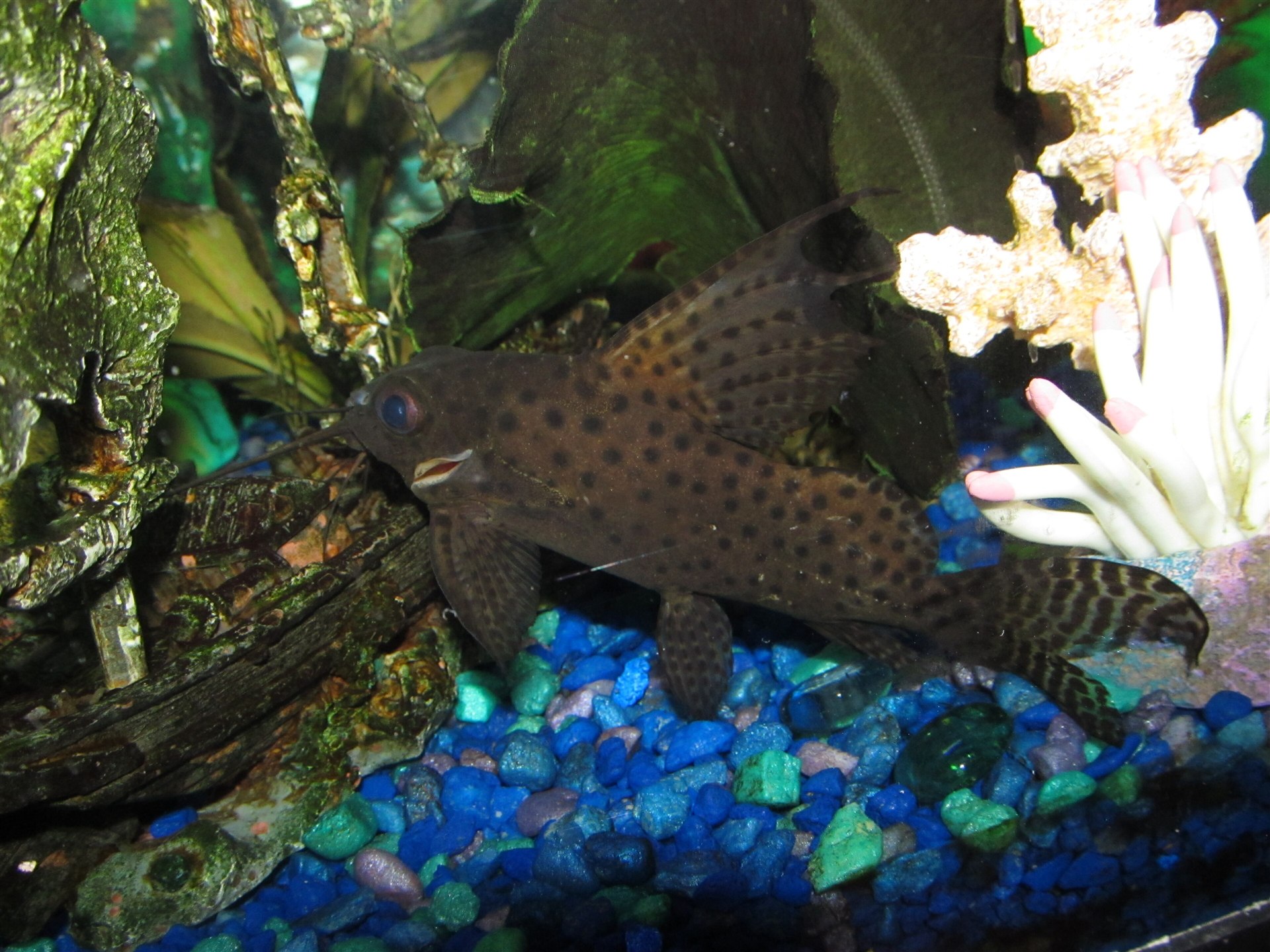
Featherfin Squeaker
Synodontis eupterus

What to notice
Featherfin Squeakers have three pairs of barbels and, in larger fish, a tall dorsal fin with extended rays. Juvenile pattern and proportions differ from adults. Shop specimens often rest under cover, so condition, breathing, barbel and fin integrity, and controlled movement matter more than constant daytime activity.
Sheltering during bright hours can be normal. A Featherfin may also use an unusual resting angle against decor, but it should be able to right itself and swim with control. Ask to observe it during feeding or under calmer lighting rather than assuming hiding equals sickness—or that total unresponsiveness is normal.
Phoenix Rasbora
Boraras merah

What to notice
Phoenix Rasboras are tiny red-toned schooling fish with dark side markings. At their size, loss of body condition can be easy to miss and a retailer label can be confused with other Boraras. View the fish from the side, compare several individuals, and confirm the identity before using species-specific compatibility data.
A shoal may compress, fade, or hide after transport or sudden movement. Give the group time to settle. One fish remaining apart and weak after the others recover deserves closer attention, especially when it is also thin or breathing fast.
Sources and further reading
These references provide scientific or technical background and disclose how TankWise works. External references do not imply that every current TankWise catalog value was sourced from, or reviewed by, those organizations. See the checker methodology and known limits for that distinction.
- Common Signs of Illness in FishMerck Veterinary Manual
Veterinary reference for broad warning signs involving appetite, breathing, body condition, color, skin, scales, swelling, and swimming.
- Introduction to Fish Health ManagementUniversity of Florida IFAS Extension
Fish-health management background on observation, environment, prevention, and the limits of identifying disease from visible signs alone.
- The Ornamental Fish TradeUniversity of Florida IFAS Extension
Responsible purchasing, trade pathways, quarantine, and preparation for introducing ornamental fish.
- Common Environmental Hazards for FishMerck Veterinary Manual
Environmental problems that can produce visible respiratory, skin, swimming, and behavioral distress.
- Paracheirodon innesi species summaryFishBase
Taxonomy and species background for the Neon Tetra.
- Hoplisoma panda species summaryFishBase
Current accepted name, former combination, taxonomy, and species background for Panda Corydoras.
- Trigonostigma espei species summaryFishBase
Taxonomy and species background for the Lambchop Rasbora.
- Apteronotus albifrons species summaryFishBase
Taxonomy and species background for the Black Ghost Knifefish.
- Pethia nigrofasciata species summaryFishBase
Taxonomy and species background for the Black Ruby Barb.
- Carassius auratus species summaryFishBase
Taxonomic background for the domestic Goldfish species that includes the Oranda variety.
- Maylandia estherae species summaryFishBase
Taxonomy and species background for the Red Zebra Cichlid.
- Synodontis eupterus species summaryFishBase
Taxonomy and species background for the Featherfin Squeaker.
- Boraras species listFishBase
Taxonomic context for Boraras merah and the similar small Boraras species found in the aquarium trade.
- TankWise checker methodology and known limitsSimply Submerged Aquatics
The inputs, rules, score bands, safety caps, and limitations behind the TankWise compatibility preview.
Frequently asked questions
Can a fish that looks healthy still carry disease?
Yes. A visual check can reduce avoidable risk but cannot prove that a fish is free from pathogens or parasites. Quarantine every new arrival and avoid sharing wet equipment with the established aquarium.
Should I buy another fish from a tank containing a dead or visibly sick fish?
Pause. Ask what happened, what action the retailer is taking, and whether the tanks share filtration. Choosing a different individual from the same water does not remove shared exposure.
Is a pale or hiding fish automatically sick?
No. Transport, lighting, social position, age, sex, and species-normal behavior can affect color and visibility. Combine those observations with breathing, posture, body condition, skin, fins, eyes, feeding response, and the condition of the whole tank.
Does this guide diagnose a particular disease?
No. Similar visible signs can have different causes. This guide identifies reasons to pause a purchase and ask questions; suspected illness should be assessed by the retailer and, when appropriate, a qualified aquatic animal-health professional.
Where does TankWise fit?
The guide screens the individual fish. TankWise then compares the species' needs with your aquarium, water, and current livestock. The app does not certify health or guarantee behavior.